Piles (Haemorrhoids): Causes, Symptoms, Treatment & When Surgery Becomes Necessary
Introduction
Piles is one of those medical conditions that a large number of people silently suffer from for years without seeking help. The discomfort is real, the impact on daily life is significant, but the topic carries enough social stigma in India that most patients delay consulting a doctor — sometimes for years — hoping the problem will resolve on its own. It rarely does. And in the meantime, what starts as mild discomfort can progress into a painful, bleeding, and severely uncomfortable condition that interferes with every aspect of daily life. The truth is that piles — medically known as haemorrhoids — is an extremely common condition. Research suggests that nearly 75 percent of people will experience haemorrhoids at some point in their lifetime, and in India, it is estimated that over 75 million people are currently affected. It is not a condition to be ashamed of, and more importantly, it is a condition that is very effectively treated. In this comprehensive guide, Dr. Hamikchandra Patel — gastroenterologist and laparoscopic surgeon at Shaleen Multi Speciality Hospital, Sola, Ahmedabad — explains piles in complete detail: what it is, why it develops, how to identify it, and what your treatment options are at every stage.What Are Piles (Haemorrhoids)?
Haemorrhoids are swollen, inflamed veins located in and around the rectum and anus. They are similar in nature to varicose veins — the same process of vein swelling and engorgement that occurs in the legs can occur in the blood vessels of the lower rectum. Under normal circumstances, these veins exist in everyone — they are a natural part of the anal canal's vascular structure and play a role in controlling bowel movements. The problem arises when they become enlarged, inflamed, or prolapsed due to increased pressure over time. Piles is not a dangerous or life-threatening condition in most cases, but it can cause significant bleeding, pain, itching, and discomfort — and in advanced stages, it requires surgical intervention to resolve.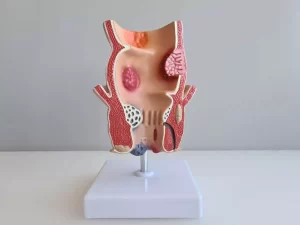
Types of Piles — Internal vs External
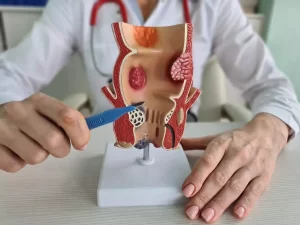
Understanding the type of piles you have is important because it determines the symptoms you experience and the treatment approach that is most appropriate. Internal haemorrhoids: Located inside the rectum, above the dentate line. Because there are very few pain-sensitive nerves in this area, internal haemorrhoids are often painless — but they bleed easily during bowel movements. In more advanced cases, they can prolapse — meaning they push out through the anal opening. External haemorrhoids: Located under the skin around the anus, below the dentate line. This area has many pain-sensitive nerves, which is why external haemorrhoids are often painful, particularly when they become thrombosed (when a blood clot forms inside the vein). They may appear as a lump or swelling around the anus. Mixed haemorrhoids: A combination of both internal and external haemorrhoids occurring together, which is quite common in advanced or long-standing cases.The Four Grades of Internal Haemorrhoids
Internal haemorrhoids are classified into four grades based on their severity. This grading system directly guides treatment decisions. Grade I: The haemorrhoid is present inside the rectum but does not prolapse. The main symptom is bleeding during bowel movements — typically fresh, bright red blood on the toilet paper or in the toilet bowl. No lump or protrusion is felt. Grade II: The haemorrhoid prolapses out of the anus during straining or bowel movement but returns inside on its own without any manual assistance. Bleeding continues and mild discomfort may be felt. Grade III: The haemorrhoid prolapses during bowel movement and does not return inside on its own — it needs to be pushed back manually with a finger. At this stage, discomfort, mucus discharge, and itching become more pronounced alongside bleeding. Grade IV: The haemorrhoid is permanently prolapsed outside the anus and cannot be pushed back inside even manually. This grade involves significant pain, constant discomfort, heavy bleeding, and often requires surgical treatment.What Causes Piles?
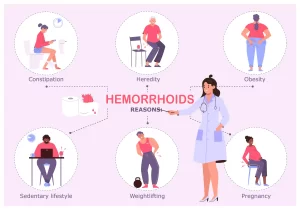
Piles develop when the veins around the lower rectum and anus are subjected to prolonged or excessive pressure that causes them to stretch and swell. The most common contributing factors include: Chronic constipation: Straining during bowel movements is one of the leading causes of haemorrhoids in India. The effort of passing hard, infrequent stools puts intense pressure on the rectal veins repeatedly over time. Low-fibre diet: A diet low in fruits, vegetables, and whole grains leads to harder stools and constipation — directly increasing haemorrhoid risk. Prolonged sitting on the toilet: Spending extended time on the toilet — a very common habit, often compounded by phone use — creates sustained pressure on the anal veins. A sedentary lifestyle: Lack of physical activity slows digestion, contributes to constipation, and reduces healthy blood circulation in the pelvic region. Pregnancy: The growing uterus puts increasing pressure on the pelvic veins during pregnancy. Combined with hormonal changes that relax vein walls, haemorrhoids are extremely common in pregnant women, particularly in the third trimester. Obesity: Excess body weight increases pressure on the pelvic and rectal veins chronically. Chronic diarrhoea: Repeated loose stools cause frequent straining and irritation of the anal area, which can also trigger haemorrhoid development. Ageing: The tissues supporting the veins in the rectum and anus naturally weaken with age, making haemorrhoids more likely in people above 45. Heredity: A family history of haemorrhoids increases your personal risk, suggesting a genetic predisposition to weaker vein walls in the rectal area.Symptoms of Piles — Recognising the Warning Signs
Symptoms of piles vary depending on the type and grade. Here are the most common ones to be aware of: Rectal bleeding: The most common symptom of internal haemorrhoids. You may notice bright red blood on toilet paper after wiping, drops of blood in the toilet bowl, or blood on the surface of your stool. Importantly, this blood is always bright red — dark or tarry blood suggests bleeding higher in the digestive tract and requires separate investigation. Pain and discomfort around the anus: More characteristic of external haemorrhoids, particularly when thrombosed. The pain can range from mild soreness to sharp, severe pain that makes sitting and walking uncomfortable. Itching or irritation: A persistent itching sensation in and around the anus, often caused by mucus secretion from prolapsed haemorrhoids irritating the surrounding skin. A lump near the anus: A soft, fleshy lump that is tender to touch, located around the anus — indicative of an external haemorrhoid or a prolapsed internal haemorrhoid. Sensation of incomplete bowel emptying: Many patients with internal haemorrhoids feel as though their bowel has not emptied completely even after a bowel movement — a sensation caused by the bulk of the prolapsed tissue. Mucus discharge: A small amount of mucus or slime on the toilet paper or in underwear, often accompanied by mild itching and skin irritation around the anus. Faecal soiling: In advanced cases where haemorrhoids prevent complete anal closure, involuntary leakage of small amounts of faecal matter can occur.