Acidity vs GERD: How to Tell the Difference & When to See a Gastro Surgeon in Ahmedabad

Introduction

Every second person in Ahmedabad has experienced acidity at some point. The burning sensation after a heavy meal, the sour taste in the mouth after a late dinner, the discomfort when you lie down — these are familiar experiences for millions of Indians. But here is the problem: what most people dismiss as "acidity" is often something more significant — Gastroesophageal Reflux Disease (GERD) — a chronic, progressive condition that, when left untreated, can lead to serious complications including oesophageal ulcers, Barrett's Oesophagus, and even oesophageal cancer. This guide explains the critical difference between ordinary acidity and GERD, the warning signs that mean you need a specialist rather than another antacid, and how Dr. Hamik Chandra Patel at Shaleen Hospital, Sola, Ahmedabad diagnoses and treats both conditions.

What Is Acidity (Acid Indigestion)?

Acidity — also called acid indigestion or heartburn — refers to a temporary increase in stomach acid production that causes a burning sensation in the upper abdomen or chest. It is extremely common and is usually triggered by:
  • Eating spicy, fried, or oily foods
  • Eating large meals quickly
  • Lying down immediately after eating
  • Drinking too much tea, coffee, or alcohol
  • Eating late at night
  • Stress and anxiety
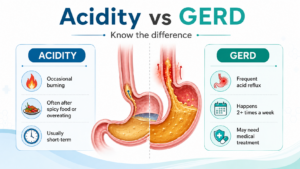
Key characteristics of simple acidity:
  • Occurs occasionally — after specific triggers
  • Resolves within 1–2 hours, often with an antacid
  • Does not significantly disrupt daily life
  • No persistent symptoms between episodes
Simple acidity is a symptom, not a disease. It is managed with dietary changes and over-the-counter antacids and does not require specialist care.

What Is GERD (Gastroesophageal Reflux Disease)?

GERD is a chronic condition in which stomach acid repeatedly flows back (refluxes) into the oesophagus — the tube connecting your mouth to your stomach. Unlike simple acidity, GERD is not occasional. It is persistent, progressive, and causes measurable damage to the oesophageal lining over time. In GERD, the Lower Oesophageal Sphincter (LES) — the muscular valve that prevents acid from flowing back up — is weakened or dysfunctional. As a result, acid repeatedly escapes from the stomach into the oesophagus, irritating and damaging its lining with every episode. GERD is diagnosed when:
  • Reflux symptoms occur 2 or more times per week
  • Symptoms significantly affect quality of life
  • Or endoscopy shows evidence of acid-related damage to the oesophagus

Acidity vs GERD: The Key Differences

Feature Simple Acidity GERD
Frequency Occasional (after triggers) 2+ times per week, often daily
Duration Resolves in 1–2 hours Persistent, chronic
Response to antacids Usually resolves Partial relief or no relief
Night-time symptoms Rare Common — often wakes patients
Regurgitation Uncommon Very common (sour/bitter fluid in mouth)
Chest pain Mild, brief Can be severe and prolonged
Impact on life Minimal Significant — disrupts sleep, eating, activity
Oesophageal damage None Progressive damage over time
Requires specialist No Yes — if untreated, risks serious complications

Symptoms of GERD — What to Watch For

GERD presents with a range of symptoms, both typical and atypical:

Typical GERD Symptoms

  • Heartburn — burning sensation in the chest, occurring frequently (2+ times/week)
  • Acid regurgitation — sour or bitter taste as acid rises to the mouth or throat
  • Chest pain — especially when lying down or bending forward
  • Difficulty swallowing (dysphagia) — as the oesophagus becomes inflamed or narrows
  • Sensation of a lump in the throat (globus)

Atypical GERD Symptoms (Often Misdiagnosed)

  • Chronic cough — particularly at night, without obvious respiratory cause
  • Hoarseness or voice changes — acid irritating the vocal cords
  • Chronic throat clearing or sensation of something stuck in the throat
  • Worsening of asthma — acid aspiration triggering bronchospasm
  • Dental erosion — acid damaging tooth enamel
  • Disrupted sleep — frequent waking due to acid discomfort

Why GERD in Ahmedabad Is More Common Than You Think

Several factors specific to Ahmedabad and Gujarat's lifestyle patterns make GERD prevalence particularly high: Dietary patterns: Ahmedabad's cuisine is rich in spicy, oily, and fried foods — all major GERD triggers. Farsan, dhokla with chutney, puri shaak, and other beloved local foods are consumed in large quantities at irregular meal times. Late eating habits: Many Ahmedabad families eat dinner late — often after 9 PM — and retire to sleep within 1–2 hours. This allows reflux to occur with the added disadvantage of horizontal position. High tea and coffee consumption: Gujarat's culture of multiple cups of tea throughout the day is a consistent GERD aggravator for susceptible individuals. Sedentary lifestyle: Long working hours at desks, minimal physical activity, and stress from business pressures contribute to both oesophageal motility disorders and increased acid production. Rising obesity rates: Excess abdominal fat increases intra-abdominal pressure, directly worsening acid reflux. Ahmedabad's urban population is experiencing rising obesity rates that correlate directly with GERD incidence.

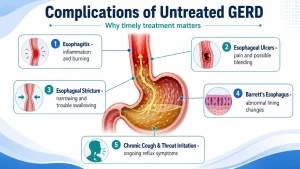
Complications of Untreated GERD

This is where GERD transitions from an inconvenience to a medical concern. Untreated or inadequately managed GERD can cause:

1. Oesophagitis

Chronic acid exposure causes inflammation and ulceration of the oesophageal lining. Symptoms intensify and healing becomes more difficult without medical intervention.

2. Oesophageal Stricture

Repeated inflammation leads to scar tissue formation, narrowing the oesophagus. Swallowing becomes progressively more difficult — initially with solids, then with liquids.

3. Barrett's Oesophagus

One of the most serious GERD complications. Repeated acid damage causes the normal oesophageal lining to be replaced by abnormal intestinal-type cells — a precancerous condition. Patients with Barrett's require regular endoscopic surveillance.

4. Oesophageal Cancer

Long-standing Barrett's Oesophagus can progress to oesophageal adenocarcinoma — one of the fastest-rising cancers globally. Early detection through regular endoscopy is the only reliable protection.

5. Aspiration Pneumonia

In severe GERD, acid and food particles can be aspirated into the lungs during sleep, causing pneumonia.

When to See Dr. Gastro in Ahmedabad for GERD

Stop relying on antacids and see Dr. Hamik if:
  • Your heartburn or reflux occurs 2 or more times per week
  • Symptoms persist despite taking over-the-counter antacids regularly
  • You wake up at night with acid coming up
  • You have difficulty swallowing — even occasionally
  • You are losing weight without trying
  • You have a persistent cough that has not responded to respiratory treatment
  • You have had acidity symptoms for more than 3–5 years without proper evaluation
  • You are over 45 and have new-onset reflux symptoms
  • There is any blood in your vomit or stools
These are not signs that you need more antacids. These are signs that you need a gastroenterologist.

How Dr. Hamik Diagnoses GERD in Ahmedabad

1. Clinical Evaluation

A detailed history of symptom frequency, triggers, diet, and lifestyle — plus examination for associated conditions (hiatal hernia, obesity).

2. Upper Endoscopy (Gold Standard)

Endoscopy provides direct visualisation of the oesophagus, stomach, and duodenum. It identifies oesophagitis severity, Barrett's Oesophagus, strictures, ulcers, and hiatal hernia. Biopsies are taken if Barrett's is suspected.

3. 24-Hour pH Monitoring

A thin probe placed in the oesophagus measures acid levels over 24 hours — the most precise way to confirm and quantify GERD.

4. Oesophageal Manometry

Measures the pressure and function of the oesophagus and LES — important when surgical treatment for GERD is being considered.

5. Barium Swallow X-ray

An older technique still useful in specific cases — particularly when structural abnormalities of the oesophagus are suspected.

GERD Treatment Options at Dr. Gastro's Clinic, Ahmedabad

Lifestyle Modifications (First Line — Essential for All Patients)

  • Elevate the head of the bed by 15–20 cm
  • Eat smaller meals more frequently — avoid large meals
  • Do not lie down for 2–3 hours after eating
  • Avoid known trigger foods (spicy, fried, oily, tomatoes, citrus, chocolate, mint)
  • Reduce or eliminate tea, coffee, and alcohol
  • Lose weight if overweight — even 5–10% weight loss significantly reduces GERD
  • Stop smoking — smoking weakens the LES directly

Medical Treatment

  • Proton Pump Inhibitors (PPIs): Omeprazole, pantoprazole, rabeprazole — the most effective medications for reducing acid production. Most GERD patients respond well to a properly dosed PPI regimen.
  • H2 Receptor Blockers: Ranitidine-equivalent agents — used for milder GERD or as add-on therapy.
  • Prokinetic Agents: Improve oesophageal motility and speed gastric emptying in selected patients.
  • Antacids: For immediate symptom relief only — not for long-term GERD management.

Surgical Treatment — Anti-Reflux Surgery (Fundoplication)

For patients who do not respond adequately to medication, have severe complications, or wish to avoid lifelong medication, laparoscopic fundoplication (Nissen or partial) is the surgical solution. Dr. Hamik Chandra Patel performs laparoscopic anti-reflux surgery at Shaleen Hospital with excellent results — eliminating acid reflux by strengthening the LES with a minimally invasive technique. Laparoscopic fundoplication results in:
  • 90%+ long-term symptom control
  • Ability to discontinue PPIs in most patients
  • Short hospital stay (1–2 days)
  • Return to normal activities within 1–2 weeks

Conclusion

Acidity and GERD are not the same condition — and treating GERD as if it were simple acidity (with antacids and diet alone) is a mistake that leads to progressive oesophageal damage, increasing medication dependency, and in serious cases, precancerous changes. If you have been managing what you call "acidity" for months or years without proper evaluation — it is time to see a specialist. At Dr. Gastro's clinic at Shaleen Multi Speciality Hospital, Sola, Ahmedabad, Dr. Hamik Chandra Patel provides expert GERD treatment in Ahmedabad — from accurate endoscopic diagnosis to medical management, dietary counselling, and laparoscopic anti-reflux surgery for patients who need it. 📍 Science City Road, Sola, Ahmedabad – 380060 | 📞 9512039041 / 8238092233 Book a Consultation → drgastro.in/contact-us/
Read more...
Endoscopy vs Colonoscopy

Endoscopy vs Colonoscopy: What’s the Difference, When Do You Need It & What to Expect at Dr. Gastro, Ahmedabad

Introduction

Two of the most frequently asked questions at Dr Gastro's clinic in Ahmedabad are: "Doctor, do I need an endoscopy or a colonoscopy?" and "What exactly happens during these procedures?" Both are diagnostic tools used by gastroenterologists to examine the digestive tract from the inside. Both involve a flexible camera. But they look at entirely different parts of your digestive system — and they are recommended for very different symptoms and conditions. If your doctor has recommended an endoscopy in Ahmedabad or a colonoscopy — or if you have symptoms that might require one — this guide will tell you everything you need to know: the differences, when each is recommended, what the procedure involves, and what to expect at Dr Gastro's clinic at Shaleen Multi Speciality Hospital, Sola, Ahmedabad.

What Is an Endoscopy?

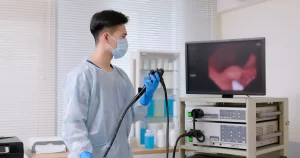
An endoscopy (also called upper GI endoscopy or gastroscopy) is a procedure that examines the upper digestive tract — the oesophagus (food pipe), stomach, and the first part of the small intestine (duodenum). A thin, flexible tube called an endoscope — with a high-definition camera and light at its tip — is passed gently through the mouth, down the throat, and into the stomach. The camera transmits live, magnified images to a monitor, allowing Dr Hamik Chandra Patel to examine the lining of your upper digestive tract in detail.

What Can an Upper Endoscopy Diagnose?

  • Acid reflux (GERD) — oesophageal inflammation, strictures
  • Gastric ulcers — stomach or duodenal ulcers
  • Helicobacter pylori infection — the bacterium responsible for most peptic ulcers
  • Oesophagitis — inflammation of the oesophagus
  • Barrett's Oesophagus — a precancerous change in the oesophageal lining
  • Hiatal hernia — stomach pushing through the diaphragm
  • Unexplained anaemia — bleeding from the upper GI tract
  • Coeliac disease — biopsy samples from the duodenum for diagnosis
  • Stomach cancer — early detection is the key to survival
  • Swallowing difficulty (dysphagia) — identifying structural causes

What Can an Endoscopy Treat?

Beyond diagnosis, an endoscopy is also therapeutic:
  • Biopsy collection for laboratory analysis
  • Polyp removal from the stomach
  • Bleeding control (endoscopic haemostasis)
  • Removal of swallowed foreign bodies
  • Dilatation of narrowed areas (strictures)
  • ERCP — examination and treatment of bile duct and pancreatic conditions

What Is a Colonoscopy?

A colonoscopy examines the lower digestive tract — the entire large intestine (colon) and the terminal portion of the small intestine (ileum). A longer, flexible scope is passed through the rectum and guided through the entire colon. This procedure requires bowel preparation the day before to ensure the colon is clean and clearly visible.

What Can a Colonoscopy Diagnose?

  • Colorectal cancer — the most important reason for colonoscopy
  • Polyps — precancerous growths on the colon lining (removed during the procedure)
  • Inflammatory bowel disease (IBD) — Crohn's disease and ulcerative colitis
  • Diverticular disease — small pouches in the colon wall
  • Unexplained rectal bleeding — identifying the source
  • Chronic diarrhoea or constipation — investigating structural causes
  • Iron deficiency anaemia — unexplained blood loss from the colon
  • Post-cancer surveillance — monitoring after previous colorectal cancer treatment

What Can a Colonoscopy Treat?

  • Polypectomy — removal of colon polyps (preventing cancer before it starts)
  • Bleeding control — endoscopic treatment of bleeding points
  • Biopsy — tissue samples for IBD diagnosis and cancer detection

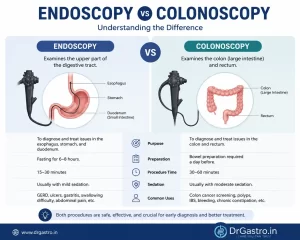
Endoscopy vs Colonoscopy: Key Differences

Feature Endoscopy (Upper GI) Colonoscopy (Lower GI)
Area examined Oesophagus, stomach, duodenum Entire colon, rectum, terminal ileum
Entry point Mouth Rectum
Preparation required Fasting for 6–8 hours Bowel prep (laxatives) the day before
Procedure duration 10–20 minutes 30–60 minutes
Sedation Light sedation or throat spray Deeper sedation recommended
Primary use Upper GI symptoms (acid, pain, vomiting) Lower GI symptoms (bleeding, altered bowel habit)
Cancer screening Stomach/oesophageal cancer Colorectal cancer

When Does Dr. Hamik Recommend an Endoscopy in Ahmedabad?

Dr. Hamik Chandra Patel recommends upper endoscopy when patients present with:
  • Persistent upper abdominal pain — especially pain that does not respond to antacids
  • Chronic acidity or GERD — when symptoms persist despite medication or when Barrett's Oesophagus is suspected
  • Difficulty swallowing (dysphagia) — food sticking in the throat or chest
  • Unexplained nausea or vomiting — particularly in older patients
  • Unexplained weight loss — a red flag symptom requiring investigation
  • Vomiting blood (haematemesis) — an emergency requiring immediate endoscopy
  • Black, tarry stools (melaena) — indicating upper GI bleeding
  • Anaemia — when a bleeding source in the upper GI tract is suspected
  • Positive H. pylori test — to confirm and assess associated damage
  • Family history of stomach cancer — surveillance in high-risk individuals
  • Suspected coeliac disease — biopsy from the duodenum

When Does Dr Hamik Recommend a Colonoscopy?

Colonoscopy is recommended for:
  • Rectal bleeding or blood in stools — never ignore this symptom
  • Unexplained change in bowel habits — new constipation, diarrhoea, or alternating pattern
  • Persistent lower abdominal cramps or bloating
  • Iron deficiency anaemia — when colonoscopy is needed to rule out colorectal cancer
  • Colorectal cancer screening — recommended from age 45–50, or earlier with family history
  • Previous colorectal polyps or cancer — surveillance colonoscopy
  • Suspected inflammatory bowel disease — Crohn's disease or ulcerative colitis
  • Abnormal CT scan findings in the colon requiring direct visualisation
  • Unexplained significant weight loss combined with bowel symptoms

What to Expect During an Endoscopy at Dr Gastro's Clinic, Ahmedabad

Before the Procedure

  • Fast for 6–8 hours before your endoscopy (no food or water)
  • Inform Dr. Hamik of any medications, especially blood thinners
  • Bring a companion who can accompany you home if sedation is used
  • Routine blood tests may be requested beforehand

During the Procedure

  • You will lie on your left side on a procedure bed
  • A mouthguard is placed to protect your teeth and the scope
  • A throat spray or light sedation is administered for comfort
  • The endoscope is gently passed through your mouth — you may feel mild pressure, but should not feel pain
  • The entire procedure takes 10–20 minutes
  • If biopsies are taken or polyps removed, you will not feel this

After the Procedure

  • You will rest in recovery for 30–60 minutes
  • If sedated, you cannot drive yourself home
  • Mild bloating, belching, or a sore throat for a few hours is normal
  • Biopsy results are typically available within 5–7 days
  • Dr. Hamik discusses findings immediately after the procedure

What to Expect During a Colonoscopy at Dr Gastro's Clinic, Ahmedabad

Bowel Preparation — The Day Before

The most important part of colonoscopy preparation is ensuring your colon is completely clean. Dr Hamik's team will provide:
  • A specific bowel preparation laxative to take the evening and morning before
  • Clear dietary instructions (clear liquids only the day before)
  • Timing instructions for medication use
A clean bowel is critical — inadequate preparation leads to a repeat procedure.

During the Procedure

  • Performed under sedation for your comfort
  • Duration is typically 30–60 minutes
  • You may feel mild cramping as the scope moves through the colon's curves
  • Any polyps found are removed during the same procedure
  • Biopsies are taken from any suspicious areas

After the Procedure

  • Recovery takes 1–2 hours post-sedation
  • Mild bloating or gas for a few hours is normal
  • You cannot drive on the day of the procedure
  • Results discussed immediately; biopsy reports in 5–7 days
  • A soft diet is recommended for the remainder of the day
endoscopy vs colonoscopy

Can Both Be Done on the Same Day?

Yes — in selected cases, Dr Hamik Chandra Patel at Shaleen Hospital can perform both upper endoscopy and colonoscopy in a single session. This is called bidirectional endoscopy and avoids the need for two separate preparations and appointments. This is particularly convenient for patients with symptoms suggesting both upper and lower GI pathology, or for comprehensive screening.

Endoscopy Cost in Ahmedabad — What to Expect

The cost of endoscopy or colonoscopy in Ahmedabad varies based on whether biopsies are taken, sedation is used, and the specific procedure performed. Dr Gastro's clinic at Shaleen Hospital provides transparent cost estimates before any procedure. For specific pricing, please contact: 9512039041 / 8238092233.

Why Choose Dr Gastro for Endoscopy in Ahmedabad?

Dr Hamik Chandra Patel's Specialised Expertise: Dr Hamik is a qualified gastroenterologist and laparoscopic surgeon with specialised training in diagnostic and therapeutic endoscopy. His experience includes thousands of upper and lower GI endoscopy procedures, complex ERCP, and endoscopic polypectomy. Advanced Endoscopy Suite: Shaleen Multi-Speciality Hospital operates a fully equipped, hygienic endoscopy suite with high-definition imaging systems, ensuring the most accurate diagnostic views possible. Same-Day Report Discussion: Unlike many centres where patients wait days to speak with a doctor, Dr Hamik discusses endoscopy findings immediately after the procedure — giving you clarity and peace of mind the same day. Patient Comfort and Safety: Appropriate sedation, careful monitoring, and a caring nursing team ensure the procedure is as comfortable as possible. Post-procedure recovery is supervised until you are fully ready to leave.

Conclusion

Endoscopy and colonoscopy are among the most powerful diagnostic tools in gastroenterology — providing direct, high-definition views of your digestive tract that no blood test or ultrasound can match. When symptoms suggest digestive pathology, prompt endoscopic investigation is the fastest route to an accurate diagnosis and appropriate treatment. At Dr Gastro's clinic at Shaleen Multi Speciality Hospital, Sola, Ahmedabad, Dr Hamik Chandra Patel provides expert endoscopy services — with technical skill, the right equipment, and patient-centred communication that help you understand your diagnosis and options clearly. Do not delay investigation of persistent digestive symptoms. 📍 Shaleen Multi Speciality Hospital, Science City Road, Sola, Ahmedabad – 380060 📞 9512039041 / 8238092233 🕐 Mon–Fri: 8:30 AM – 5:00 PM | Saturday: 9:30 AM – 1:00 PM Book an Appointment → drgastro.in/contact-us/
Read more...