Dónde Comprar Esteroides de Forma Segura

En el mundo del culturismo y el fitness, el uso de esteroides anabólicos ha ganado popularidad como una forma de potenciar el rendimiento físico y acelerar el desarrollo muscular. Sin embargo, la compra de estos compuestos debe hacerse con cautela para evitar riesgos para la salud y problemas legales. En este artículo, le proporcionaremos una guía sobre dónde comprar esteroides de forma segura.

¿Quiere acelerar sus resultados de entrenamiento? Pida anabólicos de calidad en la farmacología deportiva https://deporte-farmacia.com/ – seguro, cómodo y sin intermediarios.

Factores a considerar al comprar esteroides

Al buscar esteroides anabólicos, es importante considerar los siguientes factores:

  1. Calidad del producto: Asegúrese de que los esteroides provengan de laboratorios que cumplan con estándares de calidad.
  2. Autenticidad: Verifique las opiniones de otros usuarios y la reputación de la fuente.
  3. Asesoría médica: Es recomendable consultar a un profesional de la salud antes de iniciar cualquier ciclo de esteroides.

Lugares donde comprar esteroides de forma segura

Existen varias opciones donde puede adquirir esteroides de manera segura:

  1. Farmacias legítimas: Algunas farmacias pueden dispensar esteroides bajo prescripción médica.
  2. Tiendas en línea de confianza: Plataformas especializadas en farmacología deportiva ofrecen productos garantizados.
  3. Comunidades de culturismo: Foros y grupos donde se comparten experiencias y recomendaciones sobre proveedores confiables.

Consejos finales

Siempre realice una investigación minuciosa antes de realizar una compra de esteroides. El uso responsable y seguro de estos compuestos debe ser su prioridad. Recuerde que la salud debe venir primero, y el asesoramiento médico es clave para evitar efectos secundarios adversos.

Read more...

Как правильно принимать Виагру Пфайзер Лабс 100 мг

Виагра Пфайзер Лабс 100 мг — это популярный препарат, предназначенный для лечения эректильной дисфункции у мужчин. Этот медикамент помогает улучшить кровообращение в области половых органов, что способствует достижению и поддержанию эрекции. Однако для достижения наилучших результатов важно соблюдать рекомендации по приему.

На сайте украинской спортивной аптеки представлена ​​самая полная информация о Виагра Пфайзер лабс 100 мг. Спешите купить!

Рекомендации по приему Виагры

Чтобы Виагра была эффективной, следуйте этим рекомендациям:

  1. Консультация с врачом: Перед началом приема препарата обязательно проконсультируйтесь с врачом, чтобы исключить противопоказания.
  2. Дозировка: Рекомендуемая начальная дозировка составляет 50 мг, однако при необходимости врач может увеличить дозу до 100 мг.
  3. Время приема: Принимайте таблетку за 30-60 минут до предполагаемого полового акта.
  4. Условия приема: Комбинируйте с легкой пищей, так как тяжелая и жирная пища может замедлить действие препарата.
  5. Не превышайте дозу: Максимальная рекомендованная доза — 100 мг в день. Не стоит принимать препарат чаще одного раза в сутки.

Возможные побочные эффекты

Как и у любого другого лекарства, у Виагры могут быть побочные эффекты. Наиболее распространенные из них:

  • Головная боль
  • Приливы крови к лицу
  • Нарушения зрения
  • Расстройства желудка

Если побочные эффекты продолжаются или становятся серьезными, немедленно обратитесь к врачу.

Заключение

Виагра Пфайзер Лабс 100 мг может быть эффективным средством для лечения эректильной дисфункции, если принимать его в соответствии с рекомендациями. Помните о необходимости индивидуальной консультации с врачом перед началом лечения.

Read more...

Preço dos Esteróides: O Que Você Precisa Saber

Os esteróides são substâncias que, apesar de seus usos médicos legítimos, são frequentemente associados a práticas de doping e ao aumento de massa muscular de forma ilegal. Muitos indivíduos se perguntam sobre o preço dos esteróides, uma vez que isso pode influenciar a decisão de compra. Neste artigo, vamos explorar os fatores que impactam os preços dos esteróides e como encontrar produtos de qualidade.

Não perca tempo com sites duvidosos – todos os produtos necessários você encontrará na loja https://forcaperformance.com/.

Fatores que Influenciam o Preço dos Esteróides

O preço dos esteróides pode variar significativamente devido a diversos fatores, incluindo:

  1. Tipo de Esteróide: Diferentes esteróides têm preços diferentes, dependendo de sua composição e eficácia.
  2. Marca: Produtos de marcas renomadas tendem a custar mais devido à sua reputação de qualidade.
  3. Forma de Administração: Esteróides podem ser encontrados em várias formas, como injetáveis ou orais, e cada uma tem um preço distinto.
  4. Legalidade: A legalidade da venda e uso de esteróides em cada país pode afetar seu preço, com produtos ilegais geralmente sendo mais caros devido ao risco associado.
  5. Qualidade e Pureza: Esteróides de alta qualidade, com pureza garantida, normalmente têm um preço mais elevado.

Onde Comprar Esteróides com Preços Justos

Ao buscar esteróides, é crucial optar por fontes confiáveis que ofereçam produtos de qualidade. Aqui estão algumas dicas para encontrar bons preços:

  1. Pesquise em Farmácias: Algumas farmácias oferecem esteróides sob prescrição médica a preços regulados.
  2. Atacadistas: Considerar a compra em atacados pode oferecer descontos por volume.
  3. Loja Online de Reputação: Comprar de sites com boas avaliações pode garantir a qualidade e segurança. A loja Força Performance é uma opção recomendada.
  4. Grupos e Comunidades Online: Participar de fóruns e grupos pode ajudar a encontrar recomendações e promoções.

Conclusão

Entender os preços dos esteróides é essencial para qualquer pessoa interessada em usar essas substâncias de forma segura e responsável. Sempre priorize a qualidade e a legalidade ao fazer suas compras, evitando armadilhas e produtos de baixo custo que possam comprometer sua saúde. Lembre-se, a saúde sempre deve vir em primeiro lugar.

Read more...

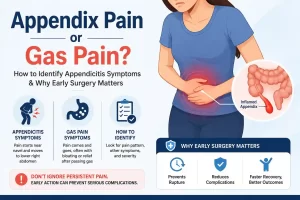
Appendix Pain or Gas Pain? How to Identify Appendicitis Symptoms & Why Early Surgery Matters

Introduction

One of the most common medical emergencies in Ahmedabad is also one of the most frequently misdiagnosed: appendicitis. Every week, patients arrive at Shaleen Hospital in Sola who have been managing what they assumed was gas pain or indigestion for 12–24 hours — only to discover that their appendix is acutely inflamed and at risk of rupturing. This delay is dangerous. A ruptured appendix can cause life-threatening peritonitis and sepsis. The challenge is that early appendicitis genuinely feels similar to gas pain, period cramps, or ordinary stomach upset. This guide helps you tell the difference — and explains exactly when abdominal pain requires immediate medical attention.

What Is the Appendix?

The appendix is a small, finger-shaped pouch attached to the large intestine in the lower-right abdomen. In adults, it measures approximately 8–10 cm. Its exact function is debated — it appears to have some role in immune function in early childhood but is not essential in adults. Appendicitis occurs when the appendix becomes inflamed — usually because its opening becomes blocked by hardened stool, mucus, or in some cases, an infection. Bacterial growth inside the blocked appendix causes swelling, increased pressure, and if untreated — perforation (rupture). Drgastro

Gas Pain vs Appendicitis: How to Tell the Difference

This is the critical question most patients ask — and the answer lies in understanding the very specific characteristics of appendicitis pain.

Gas Pain — Characteristics

  • Location: Anywhere in the abdomen, often crampy and moving
  • Character: Comes and goes in waves; relieved by passing gas or having a bowel movement
  • Associated with: Bloating, burping, gurgling sounds, bowel urgency
  • Duration: Minutes to a few hours — then resolves
  • Aggravating factors: Eating certain foods, irregular meals, constipation
  • Relief: Passing gas, antispasmodic medication, bowel movement
  • Fever: No fever — gas pain does not cause fever

Appendicitis Pain — Characteristics

  • Location: Starts around the navel (umbilicus) and migrates to the lower-right abdomen (McBurney's point) within hours
  • Character: Constant, worsening — not relieved by gas or bowel movement
  • Onset: Gradual onset — mild at first, progressively intensifying over hours
  • Duration: Does not resolve — worsens over 12–24 hours without treatment
  • Movement: Pain worsens with movement, coughing, or pressing and releasing the abdomen
  • Associated with: Fever (38–39°C), nausea, vomiting, loss of appetite
  • Key sign: Rebound tenderness — pain that is worse when pressure on the lower-right abdomen is suddenly released
  • Relief: Nothing relieves it — antacids, antispasmodics, and passing gas do NOT help

The Classic Progression of Appendicitis

Understanding how appendicitis typically develops helps you recognise when to seek urgent care: Hours 1–6: Vague Abdominal Discomfort Diffuse, dull pain around the navel. Many patients mistake this for indigestion, gas, or overeating. Nausea and loss of appetite are common early signs. Hours 6–12: Pain Migrates to Lower Right Abdomen This is the hallmark of appendicitis — pain shifting to McBurney's point (one-third of the way from the right hip bone to the navel). The pain becomes more constant, sharper, and localised. Hours 12–24: Intensifying Pain, Fever Pain is now severe and constant. Low-grade fever (38–39°C) develops as infection worsens. Movement, coughing, and pressing the abdomen become acutely painful. Beyond 24–72 Hours: Risk of Rupture Without treatment, the inflamed appendix can rupture — spilling infected contents into the abdominal cavity. This causes peritonitis — diffuse, severe abdominal pain, high fever, and sepsis. Ruptured appendicitis requires more complex surgery and longer recovery.

Warning Signs That Require IMMEDIATE Medical Attention

Go to the emergency department at Shaleen Hospital immediately if you have:
  • Severe pain in the lower-right abdomen that has persisted for more than 4–6 hours
  • Pain that started around the navel and has shifted to the lower right
  • Abdominal pain accompanied by fever (above 38°C)
  • Nausea and vomiting with lower-right abdominal pain
  • Pain that WORSENS when you release pressure after pressing your lower-right abdomen
  • Pain so severe you cannot stand upright or walk normally
  • Sudden relief of severe pain followed by worsening diffuse pain (sign of rupture)
Do NOT eat, drink, or take painkillers before being evaluated by a doctor — these can mask symptoms and delay diagnosis.

Diagnosis of Appendicitis at Dr. Gastro's Clinic

Dr. Hamik Chandra Patel uses a combination of clinical assessment and investigations to diagnose appendicitis:

Clinical Examination

  • McBurney's Point tenderness — direct tenderness at the classic appendicitis location
  • Rebound tenderness (Blumberg's sign) — pain worse on pressure release
  • Rovsing's sign — pain in the right when the left abdomen is pressed
  • Psoas sign — pain when the right hip is extended (posterior appendix)
  • Obturator sign — pain with hip rotation (pelvic appendix)

Blood Tests

  • Complete Blood Count (CBC): Elevated white blood cell count (leucocytosis) indicates infection
  • CRP (C-Reactive Protein): Elevated in inflammation

Ultrasound Abdomen

First-line imaging in Ahmedabad. Can visualise an inflamed appendix in many cases, and rules out other causes (ovarian cysts, kidney stones, etc.)

CT Scan Abdomen

Gold standard when diagnosis is uncertain. Provides the most accurate imaging of the appendix and detects perforation or abscess formation.

Alvarado Score

A clinical scoring system using symptoms, signs, and blood tests to calculate appendicitis probability — guiding the decision to operate.

Treatment: Laparoscopic Appendicectomy by Dr. Hamik, Ahmedabad

Appendicectomy — surgical removal of the inflamed appendix — is the definitive and only reliable treatment for acute appendicitis. There is no effective long-term medical management for an inflamed appendix.

Why Laparoscopic Appendicectomy?

Dr. Hamik Chandra Patel performs laparoscopic (keyhole) appendicectomy — the gold standard surgical approach:
  • 3 small incisions (5–10 mm each) instead of a large open cut
  • Camera and instruments inserted through the incisions
  • Appendix identified, its blood supply clipped, and it is cleanly removed
  • Procedure takes 30–45 minutes under general anaesthesia
  • Same-day or next-day discharge for uncomplicated appendicitis
  • Return to desk work within 5–7 days
  • Full recovery within 2–3 weeks
  • Minimal scarring — barely visible marks remain

Uncomplicated vs Perforated Appendicitis

Uncomplicated appendicitis (no rupture): Straightforward laparoscopic surgery with excellent outcomes. Short hospital stay, quick recovery. Perforated appendicitis (ruptured): Requires more complex surgery to clean the abdominal cavity, possible drain placement, and a longer hospital stay. Recovery is longer and risk of complications is higher. This is why timing matters enormously — the sooner the surgery, the better the outcome. gas pain

Why Early Surgery Saves Lives — and Prevents Complications

Every hour of delay between onset of appendicitis symptoms and surgery increases the risk of rupture. Studies show:
  • Appendix rupture rate increases significantly after 36 hours of symptoms
  • Ruptured appendicitis has a complication rate 3–5 times higher than uncomplicated cases
  • Ruptured appendicitis requires a 3–5 times longer hospital stay
  • Risk of post-operative complications (wound infection, abscess, prolonged ileus) is dramatically higher after perforation
The message is unambiguous: if appendicitis is suspected, get to the hospital immediately — do not wait and see if it improves.

Conclusion

Appendicitis is a time-critical surgical emergency. The difference between a simple 45-minute operation and a complex, potentially life-threatening one is measured in hours — not days. If you or a family member in Ahmedabad has lower-right abdominal pain that is constant, worsening, and accompanied by fever and nausea — do not try to manage it at home. Seek emergency evaluation immediately. Dr. Hamik Chandra Patel at Shaleen Multi Speciality Hospital, Sola is available for emergency surgical consultation and is experienced in laparoscopic appendicectomy — delivering fast, safe, minimally invasive appendicitis surgery in Ahmedabad. 📍 Science City Road, Sola, Ahmedabad – 380060 | 📞 9512039041 / 8238092233
Read more...

Acidity vs GERD: How to Tell the Difference & When to See a Gastro Surgeon in Ahmedabad

Introduction

Every second person in Ahmedabad has experienced acidity at some point. The burning sensation after a heavy meal, the sour taste in the mouth after a late dinner, the discomfort when you lie down — these are familiar experiences for millions of Indians. But here is the problem: what most people dismiss as "acidity" is often something more significant — Gastroesophageal Reflux Disease (GERD) — a chronic, progressive condition that, when left untreated, can lead to serious complications including oesophageal ulcers, Barrett's Oesophagus, and even oesophageal cancer. This guide explains the critical difference between ordinary acidity and GERD, the warning signs that mean you need a specialist rather than another antacid, and how Dr. Hamik Chandra Patel at Shaleen Hospital, Sola, Ahmedabad diagnoses and treats both conditions.

What Is Acidity (Acid Indigestion)?

Acidity — also called acid indigestion or heartburn — refers to a temporary increase in stomach acid production that causes a burning sensation in the upper abdomen or chest. It is extremely common and is usually triggered by:
  • Eating spicy, fried, or oily foods
  • Eating large meals quickly
  • Lying down immediately after eating
  • Drinking too much tea, coffee, or alcohol
  • Eating late at night
  • Stress and anxiety
Key characteristics of simple acidity:
  • Occurs occasionally — after specific triggers
  • Resolves within 1–2 hours, often with an antacid
  • Does not significantly disrupt daily life
  • No persistent symptoms between episodes
Simple acidity is a symptom, not a disease. It is managed with dietary changes and over-the-counter antacids and does not require specialist care.

What Is GERD (Gastroesophageal Reflux Disease)?

GERD is a chronic condition in which stomach acid repeatedly flows back (refluxes) into the oesophagus — the tube connecting your mouth to your stomach. Unlike simple acidity, GERD is not occasional. It is persistent, progressive, and causes measurable damage to the oesophageal lining over time. In GERD, the Lower Oesophageal Sphincter (LES) — the muscular valve that prevents acid from flowing back up — is weakened or dysfunctional. As a result, acid repeatedly escapes from the stomach into the oesophagus, irritating and damaging its lining with every episode. GERD is diagnosed when:
  • Reflux symptoms occur 2 or more times per week
  • Symptoms significantly affect quality of life
  • Or endoscopy shows evidence of acid-related damage to the oesophagus

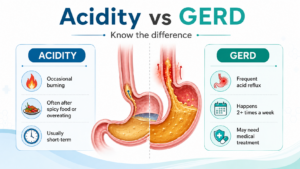
Acidity vs GERD: The Key Differences

Feature Simple Acidity GERD
Frequency Occasional (after triggers) 2+ times per week, often daily
Duration Resolves in 1–2 hours Persistent, chronic
Response to antacids Usually resolves Partial relief or no relief
Night-time symptoms Rare Common — often wakes patients
Regurgitation Uncommon Very common (sour/bitter fluid in mouth)
Chest pain Mild, brief Can be severe and prolonged
Impact on life Minimal Significant — disrupts sleep, eating, activity
Oesophageal damage None Progressive damage over time
Requires specialist No Yes — if untreated, risks serious complications

Symptoms of GERD — What to Watch For

GERD presents with a range of symptoms, both typical and atypical:

Typical GERD Symptoms

  • Heartburn — burning sensation in the chest, occurring frequently (2+ times/week)
  • Acid regurgitation — sour or bitter taste as acid rises to the mouth or throat
  • Chest pain — especially when lying down or bending forward
  • Difficulty swallowing (dysphagia) — as the oesophagus becomes inflamed or narrows
  • Sensation of a lump in the throat (globus)

Atypical GERD Symptoms (Often Misdiagnosed)

  • Chronic cough — particularly at night, without obvious respiratory cause
  • Hoarseness or voice changes — acid irritating the vocal cords
  • Chronic throat clearing or sensation of something stuck in the throat
  • Worsening of asthma — acid aspiration triggering bronchospasm
  • Dental erosion — acid damaging tooth enamel
  • Disrupted sleep — frequent waking due to acid discomfort

Why GERD in Ahmedabad Is More Common Than You Think

Several factors specific to Ahmedabad and Gujarat's lifestyle patterns make GERD prevalence particularly high: Dietary patterns: Ahmedabad's cuisine is rich in spicy, oily, and fried foods — all major GERD triggers. Farsan, dhokla with chutney, puri shaak, and other beloved local foods are consumed in large quantities at irregular meal times. Late eating habits: Many Ahmedabad families eat dinner late — often after 9 PM — and retire to sleep within 1–2 hours. This allows reflux to occur with the added disadvantage of horizontal position. High tea and coffee consumption: Gujarat's culture of multiple cups of tea throughout the day is a consistent GERD aggravator for susceptible individuals. Sedentary lifestyle: Long working hours at desks, minimal physical activity, and stress from business pressures contribute to both oesophageal motility disorders and increased acid production. Rising obesity rates: Excess abdominal fat increases intra-abdominal pressure, directly worsening acid reflux. Ahmedabad's urban population is experiencing rising obesity rates that correlate directly with GERD incidence.

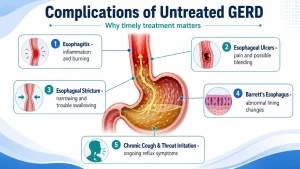
Complications of Untreated GERD

This is where GERD transitions from an inconvenience to a medical concern. Untreated or inadequately managed GERD can cause:

1. Oesophagitis

Chronic acid exposure causes inflammation and ulceration of the oesophageal lining. Symptoms intensify and healing becomes more difficult without medical intervention.

2. Oesophageal Stricture

Repeated inflammation leads to scar tissue formation, narrowing the oesophagus. Swallowing becomes progressively more difficult — initially with solids, then with liquids.

3. Barrett's Oesophagus

One of the most serious GERD complications. Repeated acid damage causes the normal oesophageal lining to be replaced by abnormal intestinal-type cells — a precancerous condition. Patients with Barrett's require regular endoscopic surveillance.

4. Oesophageal Cancer

Long-standing Barrett's Oesophagus can progress to oesophageal adenocarcinoma — one of the fastest-rising cancers globally. Early detection through regular endoscopy is the only reliable protection.

5. Aspiration Pneumonia

In severe GERD, acid and food particles can be aspirated into the lungs during sleep, causing pneumonia.

When to See Dr. Gastro in Ahmedabad for GERD

Stop relying on antacids and see Dr. Hamik if:
  • Your heartburn or reflux occurs 2 or more times per week
  • Symptoms persist despite taking over-the-counter antacids regularly
  • You wake up at night with acid coming up
  • You have difficulty swallowing — even occasionally
  • You are losing weight without trying
  • You have a persistent cough that has not responded to respiratory treatment
  • You have had acidity symptoms for more than 3–5 years without proper evaluation
  • You are over 45 and have new-onset reflux symptoms
  • There is any blood in your vomit or stools
These are not signs that you need more antacids. These are signs that you need a gastroenterologist.

How Dr. Hamik Diagnoses GERD in Ahmedabad

1. Clinical Evaluation

A detailed history of symptom frequency, triggers, diet, and lifestyle — plus examination for associated conditions (hiatal hernia, obesity).

2. Upper Endoscopy (Gold Standard)

Endoscopy provides direct visualisation of the oesophagus, stomach, and duodenum. It identifies oesophagitis severity, Barrett's Oesophagus, strictures, ulcers, and hiatal hernia. Biopsies are taken if Barrett's is suspected.

3. 24-Hour pH Monitoring

A thin probe placed in the oesophagus measures acid levels over 24 hours — the most precise way to confirm and quantify GERD.

4. Oesophageal Manometry

Measures the pressure and function of the oesophagus and LES — important when surgical treatment for GERD is being considered.

5. Barium Swallow X-ray

An older technique still useful in specific cases — particularly when structural abnormalities of the oesophagus are suspected.

GERD Treatment Options at Dr. Gastro's Clinic, Ahmedabad

Lifestyle Modifications (First Line — Essential for All Patients)

  • Elevate the head of the bed by 15–20 cm
  • Eat smaller meals more frequently — avoid large meals
  • Do not lie down for 2–3 hours after eating
  • Avoid known trigger foods (spicy, fried, oily, tomatoes, citrus, chocolate, mint)
  • Reduce or eliminate tea, coffee, and alcohol
  • Lose weight if overweight — even 5–10% weight loss significantly reduces GERD
  • Stop smoking — smoking weakens the LES directly

Medical Treatment

  • Proton Pump Inhibitors (PPIs): Omeprazole, pantoprazole, rabeprazole — the most effective medications for reducing acid production. Most GERD patients respond well to a properly dosed PPI regimen.
  • H2 Receptor Blockers: Ranitidine-equivalent agents — used for milder GERD or as add-on therapy.
  • Prokinetic Agents: Improve oesophageal motility and speed gastric emptying in selected patients.
  • Antacids: For immediate symptom relief only — not for long-term GERD management.

Surgical Treatment — Anti-Reflux Surgery (Fundoplication)

For patients who do not respond adequately to medication, have severe complications, or wish to avoid lifelong medication, laparoscopic fundoplication (Nissen or partial) is the surgical solution. Dr. Hamik Chandra Patel performs laparoscopic anti-reflux surgery at Shaleen Hospital with excellent results — eliminating acid reflux by strengthening the LES with a minimally invasive technique. Laparoscopic fundoplication results in:
  • 90%+ long-term symptom control
  • Ability to discontinue PPIs in most patients
  • Short hospital stay (1–2 days)
  • Return to normal activities within 1–2 weeks

Conclusion

Acidity and GERD are not the same condition — and treating GERD as if it were simple acidity (with antacids and diet alone) is a mistake that leads to progressive oesophageal damage, increasing medication dependency, and in serious cases, precancerous changes. If you have been managing what you call "acidity" for months or years without proper evaluation — it is time to see a specialist. At Dr. Gastro's clinic at Shaleen Multi Speciality Hospital, Sola, Ahmedabad, Dr. Hamik Chandra Patel provides expert GERD treatment in Ahmedabad — from accurate endoscopic diagnosis to medical management, dietary counselling, and laparoscopic anti-reflux surgery for patients who need it. 📍 Science City Road, Sola, Ahmedabad – 380060 | 📞 9512039041 / 8238092233 Book a Consultation → drgastro.in/contact-us/
Read more...
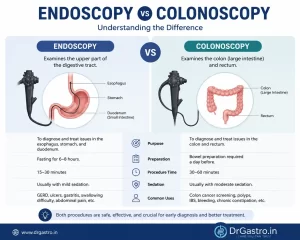
Endoscopy vs Colonoscopy

Endoscopy vs Colonoscopy: What’s the Difference, When Do You Need It & What to Expect at Dr. Gastro, Ahmedabad

Introduction

Two of the most frequently asked questions at Dr Gastro's clinic in Ahmedabad are: "Doctor, do I need an endoscopy or a colonoscopy?" and "What exactly happens during these procedures?" Both are diagnostic tools used by gastroenterologists to examine the digestive tract from the inside. Both involve a flexible camera. But they look at entirely different parts of your digestive system — and they are recommended for very different symptoms and conditions. If your doctor has recommended an endoscopy in Ahmedabad or a colonoscopy — or if you have symptoms that might require one — this guide will tell you everything you need to know: the differences, when each is recommended, what the procedure involves, and what to expect at Dr Gastro's clinic at Shaleen Multi Speciality Hospital, Sola, Ahmedabad.

What Is an Endoscopy?

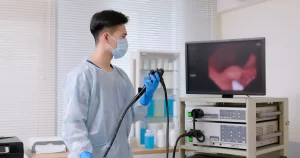
An endoscopy (also called upper GI endoscopy or gastroscopy) is a procedure that examines the upper digestive tract — the oesophagus (food pipe), stomach, and the first part of the small intestine (duodenum). A thin, flexible tube called an endoscope — with a high-definition camera and light at its tip — is passed gently through the mouth, down the throat, and into the stomach. The camera transmits live, magnified images to a monitor, allowing Dr Hamik Chandra Patel to examine the lining of your upper digestive tract in detail.

What Can an Upper Endoscopy Diagnose?

  • Acid reflux (GERD) — oesophageal inflammation, strictures
  • Gastric ulcers — stomach or duodenal ulcers
  • Helicobacter pylori infection — the bacterium responsible for most peptic ulcers
  • Oesophagitis — inflammation of the oesophagus
  • Barrett's Oesophagus — a precancerous change in the oesophageal lining
  • Hiatal hernia — stomach pushing through the diaphragm
  • Unexplained anaemia — bleeding from the upper GI tract
  • Coeliac disease — biopsy samples from the duodenum for diagnosis
  • Stomach cancer — early detection is the key to survival
  • Swallowing difficulty (dysphagia) — identifying structural causes

What Can an Endoscopy Treat?

Beyond diagnosis, an endoscopy is also therapeutic:
  • Biopsy collection for laboratory analysis
  • Polyp removal from the stomach
  • Bleeding control (endoscopic haemostasis)
  • Removal of swallowed foreign bodies
  • Dilatation of narrowed areas (strictures)
  • ERCP — examination and treatment of bile duct and pancreatic conditions

What Is a Colonoscopy?

A colonoscopy examines the lower digestive tract — the entire large intestine (colon) and the terminal portion of the small intestine (ileum). A longer, flexible scope is passed through the rectum and guided through the entire colon. This procedure requires bowel preparation the day before to ensure the colon is clean and clearly visible.

What Can a Colonoscopy Diagnose?

  • Colorectal cancer — the most important reason for colonoscopy
  • Polyps — precancerous growths on the colon lining (removed during the procedure)
  • Inflammatory bowel disease (IBD) — Crohn's disease and ulcerative colitis
  • Diverticular disease — small pouches in the colon wall
  • Unexplained rectal bleeding — identifying the source
  • Chronic diarrhoea or constipation — investigating structural causes
  • Iron deficiency anaemia — unexplained blood loss from the colon
  • Post-cancer surveillance — monitoring after previous colorectal cancer treatment

What Can a Colonoscopy Treat?

  • Polypectomy — removal of colon polyps (preventing cancer before it starts)
  • Bleeding control — endoscopic treatment of bleeding points
  • Biopsy — tissue samples for IBD diagnosis and cancer detection

Endoscopy vs Colonoscopy: Key Differences

Feature Endoscopy (Upper GI) Colonoscopy (Lower GI)
Area examined Oesophagus, stomach, duodenum Entire colon, rectum, terminal ileum
Entry point Mouth Rectum
Preparation required Fasting for 6–8 hours Bowel prep (laxatives) the day before
Procedure duration 10–20 minutes 30–60 minutes
Sedation Light sedation or throat spray Deeper sedation recommended
Primary use Upper GI symptoms (acid, pain, vomiting) Lower GI symptoms (bleeding, altered bowel habit)
Cancer screening Stomach/oesophageal cancer Colorectal cancer

When Does Dr. Hamik Recommend an Endoscopy in Ahmedabad?

Dr. Hamik Chandra Patel recommends upper endoscopy when patients present with:
  • Persistent upper abdominal pain — especially pain that does not respond to antacids
  • Chronic acidity or GERD — when symptoms persist despite medication or when Barrett's Oesophagus is suspected
  • Difficulty swallowing (dysphagia) — food sticking in the throat or chest
  • Unexplained nausea or vomiting — particularly in older patients
  • Unexplained weight loss — a red flag symptom requiring investigation
  • Vomiting blood (haematemesis) — an emergency requiring immediate endoscopy
  • Black, tarry stools (melaena) — indicating upper GI bleeding
  • Anaemia — when a bleeding source in the upper GI tract is suspected
  • Positive H. pylori test — to confirm and assess associated damage
  • Family history of stomach cancer — surveillance in high-risk individuals
  • Suspected coeliac disease — biopsy from the duodenum

When Does Dr Hamik Recommend a Colonoscopy?

Colonoscopy is recommended for:
  • Rectal bleeding or blood in stools — never ignore this symptom
  • Unexplained change in bowel habits — new constipation, diarrhoea, or alternating pattern
  • Persistent lower abdominal cramps or bloating
  • Iron deficiency anaemia — when colonoscopy is needed to rule out colorectal cancer
  • Colorectal cancer screening — recommended from age 45–50, or earlier with family history
  • Previous colorectal polyps or cancer — surveillance colonoscopy
  • Suspected inflammatory bowel disease — Crohn's disease or ulcerative colitis
  • Abnormal CT scan findings in the colon requiring direct visualisation
  • Unexplained significant weight loss combined with bowel symptoms

What to Expect During an Endoscopy at Dr Gastro's Clinic, Ahmedabad

Before the Procedure

  • Fast for 6–8 hours before your endoscopy (no food or water)
  • Inform Dr. Hamik of any medications, especially blood thinners
  • Bring a companion who can accompany you home if sedation is used
  • Routine blood tests may be requested beforehand

During the Procedure

  • You will lie on your left side on a procedure bed
  • A mouthguard is placed to protect your teeth and the scope
  • A throat spray or light sedation is administered for comfort
  • The endoscope is gently passed through your mouth — you may feel mild pressure, but should not feel pain
  • The entire procedure takes 10–20 minutes
  • If biopsies are taken or polyps removed, you will not feel this

After the Procedure

  • You will rest in recovery for 30–60 minutes
  • If sedated, you cannot drive yourself home
  • Mild bloating, belching, or a sore throat for a few hours is normal
  • Biopsy results are typically available within 5–7 days
  • Dr. Hamik discusses findings immediately after the procedure

What to Expect During a Colonoscopy at Dr Gastro's Clinic, Ahmedabad

Bowel Preparation — The Day Before

The most important part of colonoscopy preparation is ensuring your colon is completely clean. Dr Hamik's team will provide:
  • A specific bowel preparation laxative to take the evening and morning before
  • Clear dietary instructions (clear liquids only the day before)
  • Timing instructions for medication use
A clean bowel is critical — inadequate preparation leads to a repeat procedure.

During the Procedure

  • Performed under sedation for your comfort
  • Duration is typically 30–60 minutes
  • You may feel mild cramping as the scope moves through the colon's curves
  • Any polyps found are removed during the same procedure
  • Biopsies are taken from any suspicious areas

After the Procedure

  • Recovery takes 1–2 hours post-sedation
  • Mild bloating or gas for a few hours is normal
  • You cannot drive on the day of the procedure
  • Results discussed immediately; biopsy reports in 5–7 days
  • A soft diet is recommended for the remainder of the day
endoscopy vs colonoscopy

Can Both Be Done on the Same Day?

Yes — in selected cases, Dr Hamik Chandra Patel at Shaleen Hospital can perform both upper endoscopy and colonoscopy in a single session. This is called bidirectional endoscopy and avoids the need for two separate preparations and appointments. This is particularly convenient for patients with symptoms suggesting both upper and lower GI pathology, or for comprehensive screening.

Endoscopy Cost in Ahmedabad — What to Expect

The cost of endoscopy or colonoscopy in Ahmedabad varies based on whether biopsies are taken, sedation is used, and the specific procedure performed. Dr Gastro's clinic at Shaleen Hospital provides transparent cost estimates before any procedure. For specific pricing, please contact: 9512039041 / 8238092233.

Why Choose Dr Gastro for Endoscopy in Ahmedabad?

Dr Hamik Chandra Patel's Specialised Expertise: Dr Hamik is a qualified gastroenterologist and laparoscopic surgeon with specialised training in diagnostic and therapeutic endoscopy. His experience includes thousands of upper and lower GI endoscopy procedures, complex ERCP, and endoscopic polypectomy. Advanced Endoscopy Suite: Shaleen Multi-Speciality Hospital operates a fully equipped, hygienic endoscopy suite with high-definition imaging systems, ensuring the most accurate diagnostic views possible. Same-Day Report Discussion: Unlike many centres where patients wait days to speak with a doctor, Dr Hamik discusses endoscopy findings immediately after the procedure — giving you clarity and peace of mind the same day. Patient Comfort and Safety: Appropriate sedation, careful monitoring, and a caring nursing team ensure the procedure is as comfortable as possible. Post-procedure recovery is supervised until you are fully ready to leave.

Conclusion

Endoscopy and colonoscopy are among the most powerful diagnostic tools in gastroenterology — providing direct, high-definition views of your digestive tract that no blood test or ultrasound can match. When symptoms suggest digestive pathology, prompt endoscopic investigation is the fastest route to an accurate diagnosis and appropriate treatment. At Dr Gastro's clinic at Shaleen Multi Speciality Hospital, Sola, Ahmedabad, Dr Hamik Chandra Patel provides expert endoscopy services — with technical skill, the right equipment, and patient-centred communication that help you understand your diagnosis and options clearly. Do not delay investigation of persistent digestive symptoms. 📍 Shaleen Multi Speciality Hospital, Science City Road, Sola, Ahmedabad – 380060 📞 9512039041 / 8238092233 🕐 Mon–Fri: 8:30 AM – 5:00 PM | Saturday: 9:30 AM – 1:00 PM Book an Appointment → drgastro.in/contact-us/
Read more...
anal canal disorder

Understanding and Treating Anal Canal Disorders in Ahmedabad: Symptoms, Diagnosis, and Treatment

Introduction

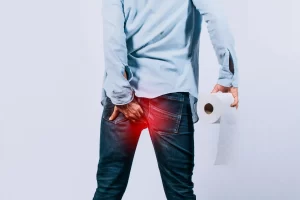
Conditions affecting the anal canal are among the most common health problems in India — yet they are among the most commonly left untreated. Whether it is the discomfort of piles (haemorrhoids) that has been managed with creams for months, a persistent itch that never goes away, a lump that appeared near the anus, or bleeding during bowel movements that has been dismissed as "nothing serious" — anal canal disorders affect millions of Indians and significantly reduce quality of life when left unaddressed. The hesitation to seek help is understandable. These conditions affect a private, sensitive part of the body, and many patients feel embarrassed discussing symptoms even with a doctor. But this delay costs them — conditions that are simple to treat in early stages can become complex, painful, and require more intensive surgery if left too long. This complete guide to anal canal disorders in Ahmedabad covers every common condition — piles, rectal prolapse, anal abscess, proctitis, perianal warts, and more — along with their symptoms, how they are diagnosed, and the full range of treatment options available at Dr. Gastro's clinic at Shaleen Multi Speciality Hospital, Sola, Ahmedabad.

The Anatomy of the Anal Canal

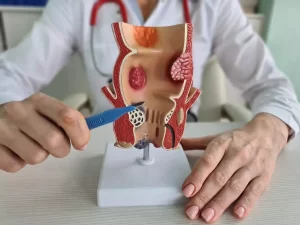
Understanding what can go wrong begins with understanding the area's anatomy. The anal canal is the last 3–4 cm of the large intestine, ending at the anal opening (anus). It is surrounded by two rings of muscle — the internal anal sphincter (involuntary, always contracted) and the external anal sphincter (voluntary, under conscious control). Together, these muscles maintain continence — the ability to control bowel movements. The dentate line (also called the pectinate line) divides the anal canal into two zones:
  • Above the dentate line: No pain sensation (internal zone)
  • Below the dentate line: Richly supplied with pain fibres (external zone — highly sensitive)
This anatomical distinction explains why internal piles are often painless while external piles and anal fissures (which occur below the dentate line) are intensely painful. anal canal disorder

Common Anal Canal Disorders: Types, Symptoms, and Causes

1. Haemorrhoids (Piles) — Most Common

Piles — medically known as haemorrhoids — are the most frequently treated anal canal condition at Dr Gastro's clinic in Ahmedabad. They are swollen, enlarged blood vessels (vascular cushions) in and around the anal canal and rectum. Everyone has these vascular cushions — they are a normal part of anal anatomy that help with continence. Haemorrhoids develop when these cushions become engorged, prolapsed, or symptomatic.

Types of Haemorrhoids

Internal Haemorrhoids: Develop above the dentate line (no pain fibres). Often asymptomatic initially, the first sign is usually bright red rectal bleeding on toilet paper or in the toilet bowl after a bowel movement. As they progress, they may prolapse (protrude outside the anal opening). Grading of Internal Haemorrhoids:
Grade Description Treatment
Grade I Bulge into the anal canal, no prolapse Diet, medication
Grade II Prolapse during straining reduces spontaneously Banding, medication
Grade III Prolapse requires manual reduction Banding, DGHAL, surgery
Grade IV Permanently prolapsed, irreducible Surgery required
External Haemorrhoids: Develop below the dentate line (painful zone). Visible as lumps around the anal opening. Cause pain, itching, and bleeding. Particularly painful when a blood clot forms (thrombosed external haemorrhoid) — causing sudden, intense perianal pain. Mixed Haemorrhoids: Both internal and external components are present simultaneously.

Causes and Risk Factors for Piles

  • Chronic constipation or straining during bowel movements
  • Low-fibre, high-spice diet — particularly common in Indian dietary patterns
  • Prolonged sitting — especially during bowel movements
  • Pregnancy (increased pelvic pressure)
  • Obesity
  • Chronic diarrhoea
  • Family history
  • Sedentary lifestyle

Symptoms of Piles

  • Bright red bleeding from the anus during or after bowel movements
  • A lump or swelling near the anal opening
  • Itching, soreness, and irritation around the anus
  • Pain and discomfort — especially with external haemorrhoids
  • Mucous discharge after bowel movements
  • Feeling of incomplete bowel emptying

2. Rectal Prolapse

Rectal prolapse occurs when the rectum (the lower portion of the large intestine) slides down from its normal position and protrudes through the anal opening. It is different from prolapsed haemorrhoids — in rectal prolapse, the full thickness of the rectal wall protrudes, typically appearing as concentric circular rings of pink/red tissue protruding from the anus. Rectal prolapse is more common in older women but can also occur in young children (usually resolving on its own) and is associated with chronic straining and weakened pelvic floor muscles.

Types of Rectal Prolapse

  • Mucosal prolapse: Only the inner lining of the rectum protrudes — often confused with large haemorrhoids
  • Full-thickness prolapse: The entire thickness of the rectal wall protrudes — the more serious form
  • Internal prolapse (intussusception): The rectum slides into itself internally without external protrusion

Symptoms

  • Tissue or a mass protruding from the anus — initially only during straining, later permanently present
  • Bright red rectal bleeding and mucus discharge
  • Faecal incontinence — inability to fully control bowel movements
  • Feeling of incomplete evacuation after bowel movements
  • Anal discomfort, pain, and heaviness

3. Anorectal Abscess

An anorectal abscess is a collection of pus in the tissues around the anus and rectum, most commonly caused by infection of the small glands just inside the anus (anal crypts). These glands can become blocked, leading to bacterial infection and the formation of an abscess. Anorectal abscess is a medical emergency — it requires urgent drainage. Up to 50% of anorectal abscesses lead to the development of an anal fistula (an abnormal tunnel) after treatment.

Types

  • Perianal abscess: Most common — a painful swelling at the edge of the anus
  • Ischiorectal abscess: A larger, deeper collection in the fat-filled space beside the rectum
  • Intersphincteric abscess: Between the two sphincter muscles — often subtle but very painful
  • Supralevator abscess: High abscess above the pelvic floor — rare but most complex

Symptoms

  • Severe, throbbing, constant pain near the anus — worsening with sitting and walking
  • A swollen, red, warm, tender lump near the anal opening
  • Fever, chills, and general malaise
  • Difficulty sitting comfortably
  • Purulent (pus) discharge if the abscess spontaneously ruptures

4. Anal Warts (Condylomata Acuminata)

Anal warts are caused by the Human Papillomavirus (HPV) — a sexually transmitted infection. They appear as small, flesh-coloured growths around and inside the anus and can range from tiny pinpoints to large, cauliflower-like masses.

Symptoms

  • Small, soft, flesh-coloured lumps or bumps around the anal area
  • Itching, burning, or moisture in the anal region
  • Occasionally bleeding during bowel movements
  • Many patients are completely asymptomatic — warts may be discovered incidentally
Important: Certain high-risk strains of HPV associated with anal warts can lead to anal canal cancer over time. Early diagnosis and treatment are essential.

5. Proctitis — Inflammation of the Rectum

Proctitis is inflammation of the lining of the rectum. It can result from a number of causes, including inflammatory bowel disease (ulcerative colitis or Crohn's disease), radiation therapy (radiation proctitis), sexually transmitted infections, or rectal injury.

Symptoms

  • Frequent urge to have a bowel movement even when the rectum is empty (tenesmus)
  • Rectal bleeding — ranging from mild spotting to significant blood
  • Passage of mucus or pus from the rectum
  • Rectal pain or a feeling of fullness and pressure
  • Diarrhoea or frequent, small bowel movements
  • Cramping in the lower abdomen

6. Anal Stenosis (Anal Stricture)

Anal stenosis is the abnormal narrowing of the anal canal, which makes it painful or difficult to pass stool. It can result from scarring after previous anal surgery, chronic inflammatory conditions, or radiation.

Symptoms

  • Difficulty passing stool; very narrow, pencil-thin stools
  • Pain during bowel movements
  • Constipation that does not respond to dietary changes
  • Sensation of incomplete evacuation

7. Anal Skin Tags

Anal skin tags are small, soft, benign growths of skin around the outside of the anus. They commonly develop as a result of resolved external haemorrhoids or anal fissures. While they are not medically dangerous, they can cause hygiene concerns, itching, and discomfort. anal canal disorder

Why Rectal Bleeding Should Never Be Ignored

One of the most important messages from this guide: rectal bleeding should always be evaluated by a specialist — never dismissed without investigation. While the most common causes of bright red rectal bleeding are benign (piles, fissures), rectal bleeding can also be a symptom of:
  • Colorectal cancer
  • Rectal cancer
  • Inflammatory bowel disease
  • Rectal polyps
At Dr Gastro's clinic in Ahmedabad, rectal bleeding is evaluated thoroughly — with a clinical examination, proctoscopy, and, where indicated, colonoscopy — to rule out serious causes before attributing bleeding to benign anorectal disease.

Diagnosis: How Dr Gastro Evaluates Anal Canal Disorders

Dr Hamik Chandra Patel is a specialist proctologist (a surgeon who specialises in diseases of the anus and rectum) — one of the very few in Sola, Ahmedabad — with expertise in diagnosing and treating the full spectrum of anal canal disorders.

Diagnostic Process

  1. Clinical History: Detailed discussion of your symptoms — nature and duration of bleeding, location and character of pain, any discharge, change in bowel habits, associated weight loss, and relevant medical and surgical history.
  2. Perianal Inspection The specialist carefully examines the perianal skin for external haemorrhoids, skin tags, warts, fissures, abscesses, or fistula openings.
  3. Digital Rectal Examination (DRE) A gloved, lubricated finger is gently inserted into the anal canal to assess sphincter tone, feel for internal masses or haemorrhoids, and detect any tenderness suggesting abscess or other pathology.
  4. Proctoscopy: A short, lighted hollow tube (proctoscope) is inserted into the anal canal to directly visualise the anal canal and lower rectum. Essential for grading internal haemorrhoids, identifying the internal opening of fistulas, and detecting polyps or mucosal abnormalities.
  5. Sigmoidoscopy / Colonoscopy Used when rectal bleeding requires more thorough investigation to rule out colorectal cancer, polyps, inflammatory bowel disease, or proctitis affecting the colon. A flexible camera is passed through the anus to examine the rectum and colon.
  6. MRI and Imaging (for Complex Cases)
  • MRI fistulogram: For complex anal fistulas — maps the tract and its relationship to sphincter muscles
  • Transanal ultrasound: Assesses sphincter integrity in cases of incontinence or rectal prolapse
  • CT scan: Used for suspected deep abscess or malignancy

Treatment Options for Anal Canal Disorders in Ahmedabad

Piles (Haemorrhoids) Treatment

Conservative Treatment (Grade I and II Piles):
  • A high-fibre diet and adequate hydration to soften stools
  • Avoid straining during bowel movements; do not sit on the toilet for extended periods
  • Sitz baths — warm water soaks after bowel movements for comfort
  • Topical creams containing local anaesthetics and anti-inflammatory agents
  • Stool softeners and laxatives were needed
Non-Surgical Procedures (Grade II and III Piles): Rubber Band Ligation: The most commonly used outpatient procedure for internal haemorrhoids. A small rubber band is placed around the base of each haemorrhoid, cutting off its blood supply. The haemorrhoid shrinks and falls off within 1–2 weeks. Multiple sessions may be required. Sclerotherapy: A chemical solution is injected into the haemorrhoid tissue, causing it to shrink. Suitable for small internal haemorrhoids. Infrared Coagulation: Infrared light is applied to the haemorrhoid base to coagulate and shrink it. Used for Grade I and II haemorrhoids. Surgical Treatment (Grade III and IV Piles): Laser Haemorrhoidoplasty: A laser fibre is inserted into the haemorrhoidal tissue to emit laser energy directly into the vascular bundle, causing shrinkage and fibrosis. Key advantages:
  • Minimally invasive with very small wound
  • Less post-operative pain than conventional surgery
  • Day surgery — home the same day
  • Faster return to normal activity
  • Low recurrence rate
Haemorrhoidectomy: Surgical excision of haemorrhoidal tissue. The most definitive treatment for large Grade III and IV haemorrhoids. Can be performed as an open (Milligan-Morgan) or closed (Ferguson) technique. Highly effective with very low recurrence, but has a longer recovery than minimally invasive options. Stapled Haemorrhoidopexy (MIPH): A circular stapler is used to remove a ring of the mucosa above the haemorrhoids, pulling the prolapsed tissue back into its correct anatomical position and disrupting the blood supply. Less painful than traditional haemorrhoidectomy, with faster recovery. DGHAL — Doppler-Guided Haemorrhoidal Artery Ligation: The arteries supplying the haemorrhoids are identified using a Doppler probe and tied off (ligated). With the blood supply cut, the haemorrhoids shrink. A highly effective minimally invasive option for Grade III haemorrhoids.

Rectal Prolapse Treatment

Conservative (for mild mucosal prolapse):
  • Dietary fibre to prevent straining
  • Pelvic floor physiotherapy to strengthen supporting muscles
Surgical Treatment: Surgery is the definitive treatment for full-thickness rectal prolapse and is tailored based on the patient's age, fitness, and degree of prolapse.
  • Rectopexy (Abdominal approach — laparoscopic): The rectum is mobilised and fixed to the sacrum (tailbone) to prevent future prolapse. Can be performed with or without mesh. This is the preferred approach for younger, fit patients.
  • Delorme's Procedure / Altemeier's Procedure (Perineal approach): Performed through the anus — preferred for elderly or high-risk patients who cannot tolerate abdominal surgery.

Anorectal Abscess Treatment

Urgent incision and drainage (I&D): The only effective treatment for anorectal abscess. The abscess is opened under anaesthesia, pus is drained, and the cavity is cleaned. Antibiotics alone are not sufficient — drainage is always required. Post-drainage, follow-up at Dr Gastro's clinic monitors for the development of an anal fistula, which may require further treatment.

Anal Warts Treatment

  • Chemical destruction: Trichloroacetic acid (TCA) or podophyllin applied topically to destroy wart tissue
  • Electrocautery or laser ablation: For larger or more extensive warts
  • Surgical excision: For very large or resistant warts
  • Immunomodulatory therapy: Imiquimod cream to stimulate the immune response against HPV
HPV vaccination is recommended to prevent recurrence and protect against high-risk strains.

Proctitis Treatment

Treatment depends on the underlying cause:
  • Infectious proctitis: Antibiotics or antiviral medication
  • Inflammatory proctitis (IBD-related): Anti-inflammatory medication (mesalazine), corticosteroid enemas
  • Radiation proctitis: Sucralfate enemas, argon plasma coagulation, or laser treatment

Why Choose Dr Gastro for Anal Canal Disorders in Ahmedabad?

Specialised Proctology Expertise: Dr Hamik Chandra Patel is a consultant laparoscopic gastrointestinal surgeon and proctologist — a dual specialisation that is rare in Ahmedabad. His expertise covers the full spectrum of anal canal conditions from the simplest skin tag to complex fistulas, prolapse, and laser haemorrhoid surgery. Complete Range of Treatments: From rubber band ligation and sclerotherapy for early haemorrhoids to laser haemorrhoidoplasty, DGHAL, stapled haemorrhoidopexy, and laparoscopic rectopexy, Dr Gastro's clinic offers every evidence-based treatment option for anorectal conditions in one place. Discreet, Patient-Centred Care: Understanding that these conditions are often associated with embarrassment and delay, Dr. Hamik creates a comfortable, non-judgmental environment. Patients consistently report that he takes time to explain each condition clearly and ensures they feel fully informed and at ease before any treatment begins. Minimally Invasive Focus: Wherever possible, Dr Hamik's approach prioritises the least invasive effective option — laser treatments, banding, and laparoscopic techniques — to minimise recovery time and discomfort and allow patients to return to normal life as quickly as possible. Advanced Diagnostic Capabilities: Proctoscopy, colonoscopy, MRI fistulogram, and transanal ultrasound are all available at or through Shaleen Multi Speciality Hospital — ensuring accurate diagnosis before any treatment decision is made.

Conclusion

Anal canal disorders — from piles and rectal prolapse to abscesses, warts, and proctitis — are common, treatable conditions. The only thing that makes them worse is the delay. Dr Hamik Chandra Patel at Dr Gastro's clinic at Shaleen Multi-Speciality Hospital, Sola, Ahmedabad, combines specialised proctology expertise with a compassionate, patient-first approach. With the full spectrum of diagnostic and treatment options available — from conservative management to advanced laser and laparoscopic techniques — every patient receives a treatment plan tailored to their condition, lifestyle, and goals. Do not let embarrassment stand between you and the relief you deserve. Book your confidential consultation at Dr Gastro in Ahmedabad today. 📍 Shaleen Multi Speciality Hospital (Shaleen Plaza, 4th & 5th Floor), Near Mangaldeep Party Plot Road, Science City Road, Sola, Ahmedabad – 380060 📞 9512039041 / 8238092233 📧 drhamikchandra@gmail.com 🕐 Mon–Fri: 8:30 AM – 5:00 PM | Saturday: 9:30 AM – 1:00 PM Book an Appointment →
Read more...
hernia surgery in ahmedabad

A Complete Guide to Hernia Surgery in Ahmedabad: What You Should Know

Introduction

A hernia is one of the most common surgical conditions in India — and yet it remains one of the most misunderstood and frequently delayed treatments. Patients often notice a bulge or lump in their groin, abdomen, or belly button and choose to ignore it for months, sometimes years. They manage with discomfort, avoid heavy lifting, and hope the problem will resolve on its own. It never does. A hernia — by definition — cannot heal itself. The defect in the muscle wall that allows tissue to push through will not close without surgical repair. And the longer it is left untreated, the higher the risk of serious complications including strangulation — a surgical emergency. If you or someone in your family has been diagnosed with a hernia or is experiencing symptoms that suggest one, this complete guide to hernia surgery in Ahmedabad answers every important question: what type of hernia you may have, what surgery involves, how long recovery takes, what it costs, and why Dr. Hamik Chandra Patel at Shaleen Multi Speciality Hospital, Sola, Ahmedabad is the right surgeon to trust.

What Is a Hernia?

A hernia occurs when an internal organ — most commonly part of the intestine or fatty tissue — pushes through a weak spot or opening in the surrounding muscle wall or connective tissue (fascia). Think of it like a weak spot in a tyre. When pressure builds, the inner tube pushes through the weakened area, creating a visible bulge. In the body, this bulge typically appears in the abdomen, groin, or belly button, and may become more prominent when standing, coughing, or straining. Hernias occur because of a combination of:
  • Pre-existing muscle weakness — sometimes present from birth, sometimes developing over time
  • Increased abdominal pressure — from straining, heavy lifting, chronic cough, constipation, obesity, or pregnancy
hernia surgery in ahmedabad

Types of Hernia: Which One Do You Have?

Understanding the type of hernia is critical for planning the right surgical approach. Dr. Hamik Chandra Patel at Dr. Gastro's clinic in Ahmedabad treats all types of hernia with expertise.

1. Inguinal Hernia — Most Common Type

An inguinal hernia occurs when tissue (usually part of the intestine) protrudes through a weak point in the abdominal muscles in the groin area, near the inguinal canal. It accounts for approximately 75% of all hernias and is far more common in men than women. Symptoms: A bulge in the groin or scrotum (in men) that becomes more noticeable when standing or coughing; aching or burning discomfort at the bulge site; occasionally, pain radiating into the scrotum. Types:
  • Direct inguinal hernia: Develops through the posterior wall of the inguinal canal. Typically occurs in older men due to age-related muscle weakening.
  • Indirect inguinal hernia: Follows the path of the inguinal canal. More common in younger men and may be congenital.

2. Umbilical Hernia

An umbilical hernia occurs when tissue or intestine pushes through the abdominal wall near the belly button (umbilicus). Common in infants (often resolves on its own), in adults it typically develops due to pressure from obesity, multiple pregnancies, or previous abdominal surgery. Symptoms: A soft, painless bulge near the belly button that may enlarge when coughing or straining. May become tender and painful over time.

3. Incisional Hernia

An incisional hernia develops at the site of a previous abdominal surgical incision. The sutured muscle can weaken over time, allowing tissue to push through the old scar. This is one of the more complex hernia types to repair. Symptoms: A bulge at or near a previous surgical scar; pain or discomfort at the site; visible enlargement with activity.

4. Hiatal Hernia

A hiatal hernia occurs when part of the stomach pushes up through the diaphragm (the muscle separating the chest and abdomen) into the chest cavity through an opening called the hiatus. Unlike other hernias, a hiatal hernia does not produce a visible bulge. It is detected on endoscopy or imaging. Types:
  • Sliding hiatal hernia (most common — 95%): The stomach slides up through the hiatus. Often associated with gastroesophageal reflux disease (GERD).
  • Para-oesophageal hiatal hernia: More serious — the stomach pushes alongside the oesophagus. Risk of obstruction and strangulation.
Symptoms: Heartburn, acid reflux, chest pain or discomfort, difficulty swallowing, belching, and regurgitation. Symptoms worsen when lying down or bending forward.

5. Femoral Hernia

A femoral hernia occurs when tissue pushes through the femoral canal — a small space near the upper thigh and groin. Less common than inguinal hernia, it is more common in women than men. Femoral hernias carry a higher risk of strangulation and typically require prompt surgical repair. Symptoms: Small bulge in the inner thigh/groin area; hip or thigh pain; symptoms may be subtle until a complication occurs.

6. Epigastric Hernia

Occurs when fatty tissue pushes through the abdominal wall between the belly button and chest. Usually small and may not cause symptoms initially, but can cause localised pain or discomfort.

7. Sportsman's Hernia (Athletic Pubalgia)

A chronic groin injury common in athletes causing pain in the groin and inner thigh without a detectable bulge. Requires specialist evaluation and specific surgical or conservative management.

Recognising Hernia Symptoms — When to See a Doctor

Hernias can be subtle in early stages. Here are the key symptoms that should prompt a medical evaluation:

Common Symptoms

  • A visible bulge or lump in the groin, abdomen, or near the belly button that appears when standing, coughing, or straining — and may disappear when lying down
  • Aching or burning discomfort at the bulge site — particularly after prolonged standing, physical activity, or coughing
  • Dragging sensation or heaviness in the groin
  • Pain or discomfort when bending, coughing, or lifting
  • For hiatal hernia: Persistent heartburn, acid reflux, chest discomfort, difficulty swallowing

Emergency Symptoms — Seek Immediate Care

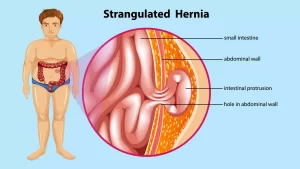
If a hernia becomes irreducible (cannot be pushed back in) or shows signs of strangulation (blood supply to the herniated tissue is cut off), it is a surgical emergency:
  • Sudden, severe pain at the hernia site that does not improve
  • A hard, tender, or darkened bulge that cannot be pushed back
  • Nausea and vomiting — suggesting bowel obstruction
  • Fever and rapid heartbeat
  • Inability to pass gas or have a bowel movement
Strangulated hernia is life-threatening. Go directly to the emergency department at Shaleen Hospital, Sola, Ahmedabad, or call 9512039041 immediately.

Hernia Diagnosis at Dr. Gastro's Clinic

Dr. Hamik Chandra Patel — a consultant laparoscopic gastrointestinal surgeon and proctologist with 10 years of surgical experience and a Fellowship in Minimal Access Surgery — conducts a thorough evaluation before recommending any treatment.

Diagnostic Process

  1. Clinical History Detailed assessment of when the bulge first appeared, its size and change over time, associated pain, triggering factors (lifting, coughing, straining), prior surgeries, and risk factors.
  2. Physical Examination Dr. Hamik performs a hands-on examination — examining the hernia with the patient standing and lying down, and during coughing (Valsalva manoeuvre) to assess the size, reducibility, and nature of the hernia.
  3. Ultrasound of Abdomen First-line imaging for most hernias. Confirms the presence of a hernia, identifies its contents (fat or intestine), and assesses for complications.
  4. CT Scan of Abdomen Used for complex or recurrent hernias, incisional hernias, or cases where the physical examination is inconclusive. Provides detailed information about the defect size and surrounding structures.
  5. Endoscopy (for Hiatal Hernia) Upper GI endoscopy is used to diagnose hiatal hernias, assess associated oesophagitis, and determine the degree of gastric involvement.

Treatment Options: From Watchful Waiting to Surgery

Watchful Waiting — For Small, Asymptomatic Hernias

For patients with a small, asymptomatic hernia (particularly inguinal hernias in older or medically unfit patients), a period of watchful waiting is sometimes appropriate. However, this requires:
  • Regular clinical review to monitor size and symptoms
  • Avoiding heavy lifting and straining
  • Treating underlying conditions (chronic cough, constipation, obesity) that increase hernia pressure
  • Immediate review if pain increases or the hernia becomes irreducible
Important: Watchful waiting delays — but does not prevent — surgery. Most hernias will eventually require repair.

Non-Surgical Management — Supportive (Not Curative)

  • Hernia truss or belt: Provides external support to hold the hernia in place. Not a treatment — does not repair the defect. Used temporarily in specific cases when surgery is delayed.
  • Lifestyle modifications: Weight loss, avoiding heavy lifting, treating chronic cough and constipation to reduce hernia pressure.

Surgical Treatment — The Only Definitive Cure

Surgery is the only way to permanently repair a hernia. At Dr. Gastro's clinic in Ahmedabad, Dr. Hamik performs hundreds of minimally invasive hernia surgeries annually, with surgical outcomes above the national average and a complication rate of less than 1%.

Laparoscopic Hernia Repair — Preferred Approach

Laparoscopic (keyhole) hernia surgery is the gold standard at Dr. Gastro's clinic in Ahmedabad. Using 3 small incisions (5–10 mm), Dr. Hamik accesses the hernia, reduces the protruding tissue, and repairs the muscle defect with a surgical mesh. Main laparoscopic techniques: TAPP — Trans-Abdominal Pre-Peritoneal Repair: Access is made through the abdominal cavity. The peritoneum (lining of the abdomen) is opened, the hernia is reduced, mesh is placed, and the peritoneum is closed. Suitable for bilateral inguinal hernias and many other hernia types. TEP — Total Extra-Peritoneal Repair: Performed entirely in the space between the abdominal wall and the peritoneum — without entering the abdominal cavity. Preferred for inguinal hernias — lower risk of internal organ injury, no intra-abdominal access. Advantages of laparoscopic hernia repair:
  • 3 tiny incisions versus a large open cut
  • Significantly less post-operative pain
  • Return to work in 5–7 days for most patients
  • Lower risk of wound infection
  • Lower recurrence rate compared to open repair for inguinal hernias
  • Simultaneous repair of both sides (bilateral) in one procedure — not easily done with open surgery
  • Excellent visualisation of the operative field through the laparoscope

Open Hernia Repair (Lichtenstein Technique)

Open repair involves a single incision directly over the hernia, reducing the herniated tissue and reinforcing the defect with surgical mesh. Still widely used for specific situations — including very large hernias, strangulated hernias requiring emergency repair, or cases not suited to laparoscopic approach. Recovery: Longer than laparoscopic — typically 1–2 weeks before return to light work, 4–6 weeks before full activity.

Mesh vs Non-Mesh Repair

The vast majority of hernia repairs today use surgical mesh — a synthetic material that reinforces the weakened muscle wall, significantly reducing recurrence rates compared to non-mesh (tissue) repair. Mesh is safe, well-tolerated, and is the international standard of care for most hernia types. Non-mesh repair (pure tissue repair) is reserved for specific situations — infected fields, very small hernias, or patient preference — and carries a higher long-term recurrence risk.

Hernia Surgery: What to Expect

Before Surgery

  • Pre-operative investigations: blood tests, ECG, chest X-ray if needed
  • Fasting: no food or water for 6–8 hours before surgery
  • Stop blood-thinning medications as advised by Dr. Hamik
  • Arrange for someone to accompany you on the day and assist at home for 24–48 hours

During Surgery

  • Anaesthesia: Laparoscopic repair — general anaesthesia. Open repair — spinal or general anaesthesia.
  • Duration: Laparoscopic inguinal hernia repair — 45–75 minutes. Complex or bilateral repairs may take 90–120 minutes.
  • Hospitalisation: Most laparoscopic hernia surgeries are day procedures or require one night's stay.

After Surgery — Recovery Timeline

Timeframe What to Expect
Day 0–1 Mild pain and soreness at incision sites — managed with medication
Day 1–3 Light activity encouraged; short walks within 24 hours
Day 3–5 Majority of pain resolves; gradual return to normal routine
Day 5–7 Return to desk work and light activity for most patients
Week 2–3 Driving possible after 7–10 days; light exercise
Week 4–6 Return to moderately physical work
Week 6 onwards Full activity resumed — including heavy lifting and vigorous exercise
Diet after hernia surgery:
  • Start with liquids and soft foods immediately after surgery
  • Return to a normal, balanced diet within 2–3 days
  • High-fibre foods to prevent constipation (straining increases pressure on the repair)
  • Adequate hydration throughout recovery

Hernia Surgery Cost in Ahmedabad

Understanding costs helps patients plan effectively. At Dr. Gastro's clinic, transparent cost estimates are provided before any procedure is confirmed. General cost range for hernia surgery in Ahmedabad (2025):
Type of Surgery Approximate Cost Range
Laparoscopic Inguinal Hernia Repair ₹45,000 – ₹90,000
Open Inguinal Hernia Repair ₹30,000 – ₹60,000
Umbilical / Incisional Hernia Repair ₹50,000 – ₹1,20,000
Bilateral Hernia (both sides) ₹70,000 – ₹1,40,000
Factors affecting total cost:
  • Type and complexity of hernia
  • Laparoscopic vs open technique
  • Type and quality of mesh used
  • Duration of hospital stay
  • Pre-operative investigations
  • Post-operative medications
Insurance coverage: Most major health insurance policies in India cover hernia surgery as a medically necessary procedure. The team at Dr. Gastro's clinic can assist with insurance documentation and pre-authorisation. hernia surgery in ahmedabad

Why Choose Dr. Gastro for Hernia Surgery in Ahmedabad?

Dr. Hamik Chandra Patel — Qualifications and Experience:
  • MBBS, MS – General Surgery
  • Fellowship in Minimal Access Surgery
  • Fellowship in Surgical Gastroenterology
  • 10 years of specialised surgical experience
  • Performs hundreds of minimally invasive hernia surgeries annually
  • Complication rate less than 1% — significantly below national average
  • 97% patient satisfaction rating
Specialised Expertise in All Hernia Types: From routine inguinal hernias to complex recurrent or incisional hernias, Dr. Hamik's experience with the full spectrum of hernia types means your case is managed by a specialist — not a generalist. Internationally Trained, Locally Present: Dr. Hamik combines international surgical training with a deep understanding of his patients' needs — taking time to explain the diagnosis, walk through treatment options, and ensure every patient makes an informed decision. State-of-the-Art Facilities at Shaleen Hospital: Shaleen Multi Speciality Hospital operates to international standards with advanced laparoscopic surgical equipment, centrally air-conditioned facilities, a dedicated modular operation theatre, and comprehensive post-operative care. Patient Reviews Speak for Themselves: Patients consistently commend Dr. Hamik for his friendliness, clear communication, and thoroughness. "He explains the procedure in detail to prepare patients mentally." "Patient-friendly nature — you can always call or text with questions and he will answer." Accessible Location in Ahmedabad: Located at Shaleen Plaza, 4th & 5th Floor, Mangaldeep Party Plot Road, Science City Road, Sola, Ahmedabad — easily accessible from Bopal, Chandkheda, Naranpura, Satellite, Gandhinagar, and across the city.

Conclusion

A hernia is not a condition to live with indefinitely. Left untreated, it will grow, cause increasing discomfort, and risk becoming a surgical emergency. But with the right surgeon, hernia repair is a safe, routine procedure — completed in under 90 minutes for most cases, with patients back on their feet within days. Dr. Hamik Chandra Patel at Dr. Gastro's clinic at Shaleen Multi Speciality Hospital, Sola, Ahmedabad, brings 10 years of specialised surgical expertise, internationally trained minimally invasive technique, and an outstanding patient satisfaction record to every hernia case he treats. Whether you have a recent diagnosis or have been managing hernia symptoms for years, the right time to address it is before it becomes an emergency. Book your consultation for hernia surgery in Ahmedabad today. 📍 Shaleen Multi Speciality Hospital (Shaleen Plaza, 4th & 5th Floor), Near Mangaldeep Party Plot Road, Science City Road, Sola, Ahmedabad – 380060 📞 9512039041 / 8238092233 📧 drhamikchandra@gmail.com 🕐 Mon–Fri: 8:30 AM – 5:00 PM | Saturday: 9:30 AM – 1:00 PM Book an Appointment →
Read more...

“Gas” or Gallstones? Why Heavy Wedding Food Triggers Sudden Stomach Pain

The wedding season is one of the most exciting and joyous times of the year, especially in India, where grand celebrations are at the heart of every tradition. However, among the festivities, music, and dance, many people face an unexpected and unpleasant experience: sudden stomach pain after indulging in heavy wedding food. While this discomfort is often dismissed as gas, there could be another underlying issue at play, like gallstones. Understanding the difference between gas and gallstone-related pain is crucial, as it can help you take the right steps for treatment and prevention. In this blog, we will explore why heavy wedding food triggers stomach pain, how to differentiate between gas and gallstones, and what you can do to prevent it. At Dr. Gastro, a trusted gastroenterologist in Ahmedabad, we are dedicated to providing expert advice and care for all your digestive concerns. Let’s delve into the relationship between heavy foods and digestive issues, and help you understand how to protect your stomach this wedding season.

Why Heavy Wedding Food Triggers Stomach Pain

Wedding banquets are known for their indulgent dishes—rich, spicy curries, deep-fried snacks, sweet desserts, and heavy meats. While all these foods contribute to the festive mood, they can wreak havoc on your digestive system, leading to discomfort and pain. Here's why:
  1. Overeating and Large Portion Sizes: During weddings, it’s easy to indulge in large portions of food due to the abundance of delicious options. Overeating stretches the stomach, putting pressure on the digestive system. This can lead to bloating, gas, and indigestion, causing discomfort in the abdomen.
  2. Fatty and Oily Foods: Many wedding dishes are high in fat and oils, such as deep-fried items, creamy gravies, and rich meats. These foods take longer to digest, which can lead to feelings of fullness, bloating, and discomfort. Additionally, high-fat foods stimulate the production of stomach acid, which can cause acid reflux or indigestion.
  3. Spicy and Heavy Ingredients: Spicy foods, common in Indian wedding dishes, can irritate the lining of the stomach and intestines. Spices like chili, mustard, and garlic can trigger acid reflux or worsen gastric issues, especially if consumed in excess. For people with sensitive digestive systems, these foods can exacerbate symptoms of heartburn and indigestion.
  4. Alcohol and Carbonated Drinks: Alcohol is often consumed in large quantities at weddings, leading to stomach irritation. Carbonated beverages like sodas can also contribute to bloating and gas. Both of these can trigger acid reflux, bloating, and distension, causing discomfort in the upper abdomen.
  5. Stress and Anxiety: Weddings can be stressful, with the pressure of attending events, meeting family members, and dealing with the excitement. Stress can disrupt the digestive process, slowing it down and making it harder for the body to break down food properly. This can contribute to indigestion, bloating, and discomfort.
   

Is It Gas or Gallstones? Understanding the Difference

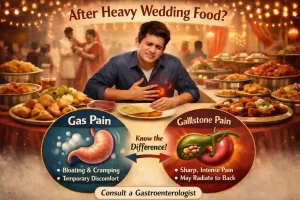
When stomach pain occurs after eating heavy food at a wedding, it’s common to assume it’s just gas or indigestion. However, in some cases, the pain could be a sign of a more serious condition like gallstones. Here’s how you can tell the difference:
  1. Gas:

Gas pain occurs when there is a buildup of gas in the stomach or intestines. This can happen after consuming heavy, greasy, or spicy foods, especially in large quantities. Symptoms of gas:
  • Bloating or feeling full
  • Sharp or cramp-like pain in the abdomen, especially after eating
  • Frequent burping or passing gas
  • Pain that comes and goes, often relieved by passing gas or a bowel movement
  • A feeling of heaviness or discomfort after meals
Cause of Gas:
  • Overeating
  • Consumption of foods that are difficult to digest (fatty, spicy, or fibrous foods)
  • Carbonated drinks and alcohol
  • Swallowing air while eating or drinking
Relief: Gas pain is typically temporary and can be relieved by passing gas, taking a walk, or consuming over-the-counter remedies like simethicone (e.g., Gas-X). A warm compress or gentle abdominal massage can also help.
  1. Gallstones:

Gallstones are hardened deposits of bile in the gallbladder, a small organ located beneath the liver. These stones can block the normal flow of bile into the intestines, causing pain. Gallstone-related pain typically occurs after eating a fatty meal, as the gallbladder is responsible for breaking down fats. Symptoms of gallstones:
  • Severe, steady pain in the upper abdomen or right side, often radiating to the back or shoulder
  • Pain that lasts from 30 minutes to several hours
  • Nausea and vomiting
  • Fever (if the gallbladder is inflamed or infected)
  • Jaundice (yellowing of the skin or eyes in severe cases)
Cause of Gallstones:
  • A high-fat diet
  • Obesity or being overweight
  • Rapid weight loss (from dieting or surgery)
  • Genetics or family history
  • Age (more common in people over 40)
  • Gender (more common in women)
Relief: Gallstone pain often requires medical intervention. In some cases, the stones may need to be removed through a procedure called cholecystectomy (removal of the gallbladder). If you suspect gallstones, it’s essential to consult with a gastroenterologist for a proper diagnosis and treatment.    

How to Prevent Stomach Pain and Digestive Issues This Wedding Season

Whether it’s gas, gallstones, or simple indigestion, there are steps you can take to avoid stomach pain and discomfort during the wedding season:
  1. Moderate Your Portions: Avoid overeating at wedding feasts. Eat smaller portions and chew your food thoroughly to aid digestion.
  2. Limit Fatty and Spicy Foods: While rich wedding dishes are tempting, try to limit your intake of fried, greasy, or spicy foods. Opt for lighter options when possible to prevent acid reflux and indigestion.
  3. Stay Hydrated: Drink plenty of water throughout the day, especially if you’re indulging in alcohol. Staying hydrated helps your digestive system process food more efficiently and prevents dehydration, which can worsen constipation and bloating.
  4. Take Digestive Enzymes: If you have a sensitive stomach, consider taking over-the-counter digestive enzyme supplements before meals. These can help break down fats and improve digestion, reducing the risk of bloating and discomfort.
  5. Avoid Stress: Weddings can be stressful, but try to manage your stress levels. Take breaks when needed, practice relaxation techniques, and avoid rushing meals.
  6. Exercise Regularly: Regular physical activity helps keep your digestive system moving and reduces bloating. If you feel discomfort after a heavy meal, take a short walk to help relieve gas and improve digestion.
  7. Consult with a Gastroenterologist: If you’re experiencing frequent or severe stomach pain, it’s essential to consult a gastroenterologist. Dr. Gastro specializes in diagnosing and treating digestive issues like gas, gallstones, acid reflux, and other gastrointestinal conditions.

Conclusion: Know the Difference, Protect Your Health

While the heavy, rich foods at weddings are a treat, they can trigger digestive issues like gas and, in some cases, gallstones. By understanding the symptoms and causes of both conditions, you can avoid unnecessary discomfort this wedding season. At Dr. Gastro, we are committed to helping you maintain optimal digestive health, whether you’re dealing with occasional indigestion or more serious conditions like gallstones. If you're experiencing frequent stomach pain or suspect a more serious issue, don’t hesitate to seek professional help.
Read more...